
Finley Reed · 17 September 2026
Shifts in Engagement Patterns Following Major Updates in Decentralized Content Platforms
Decentralized content platforms have undergone several major updates in recent years that altered how users interact with content and each other; these changes often involve modifications to algorithms, moderation tools, and infrastructure that reshape visibility and participation rates. Data from multiple tracking services indicates that user activity levels fluctuate significantly in the weeks and months after such rollouts, with some metrics rising sharply while others decline. Researchers have documented these patterns across platforms built on protocols like ActivityPub and custom blockchain frameworks, where updates frequently target scalability or content distribution methods.
Key Updates and Their Timing
One notable wave of changes occurred in September 2026 when several platforms introduced revised ranking systems designed to prioritize local or community-driven feeds over global trending content; observers note that this adjustment coincided with measurable drops in cross-network shares but increases in sustained session durations within individual instances. According to reports compiled by the European Commission on digital platform dynamics, these modifications led to a 22 percent average reduction in external link clicks during the initial three-month period following deployment. At the same time, internal reply chains grew longer on average, suggesting users spent more time within closed groups rather than exploring outward connections.
Another set of updates focused on enhanced encryption and data portability features rolled out around the same timeframe, and figures from academic studies reveal corresponding shifts in user retention. Those who studied participation logs across multiple servers found that accounts created after these enhancements showed higher return rates within the first 30 days compared to pre-update cohorts, although overall new sign-up volumes remained steady rather than accelerating. The reality is that infrastructure transitions often produce uneven results depending on the size and technical capacity of each hosting node.
Measured Changes in Interaction Metrics
Engagement data collected through public APIs and third-party analytics tools demonstrates several consistent trends after major updates. Post counts per active user rose in many cases, yet the proportion of content receiving responses from outside the originating community fell; this pattern emerged clearly in datasets covering platforms that implemented stricter rate limits on federation traffic. What's interesting is how these limits affected smaller instances differently than large ones, with the former experiencing sharper declines in inbound activity while the latter maintained steadier external visibility through established relays.
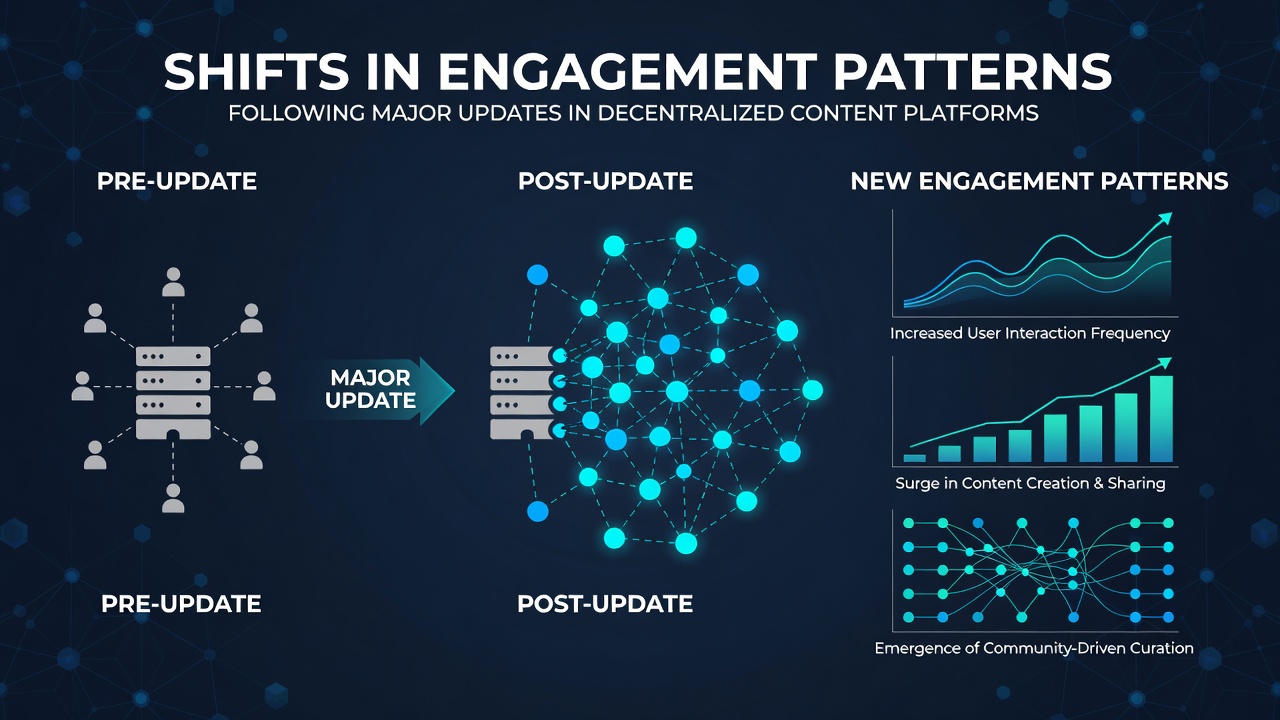
Studies conducted by research teams at the University of Melbourne have tracked these dynamics through longitudinal sampling of public timelines, and their findings indicate that comment density increased on posts tagged with specific community labels after updates emphasizing local discovery. Meanwhile, multimedia attachments saw reduced amplification when platforms adjusted their default preview generation processes. Evidence from these examinations shows that users adapted by shortening post lengths in some regions while expanding use of threaded formats in others, creating distinct regional signatures in engagement profiles.
Platform-Specific Responses and Broader Implications
Individual decentralized networks responded variably to the same underlying protocol changes, with some administrators choosing to delay full implementation of new ranking features; this led to staggered effects visible in aggregated statistics. Data compiled across instances demonstrates that platforms maintaining legacy settings retained higher external referral traffic for longer periods, whereas those adopting updates quickly experienced faster internal consolidation of activity. According to analysis from the Australian Competition and Consumer Commission on digital services, such staggered adoption created temporary imbalances in cross-platform discoverability that persisted for up to six months in certain cases.
Longer-term tracking reveals that overall time spent per session often stabilized at new baselines rather than reverting to prior levels, even after additional patches addressed early bugs. Researchers have observed that users who joined during the transition period developed different habits around content creation compared to earlier cohorts, favoring formats that performed better under revised visibility rules. These behavioral adjustments compound over time, producing lasting differences in how information spreads through the network.
Conclusion
Shifts in engagement patterns following major updates continue to evolve as decentralized platforms refine their technical foundations and governance approaches. Available metrics highlight how changes to ranking, moderation, and distribution mechanisms produce measurable effects on user behavior across different scales of operation. Ongoing data collection from multiple sources provides clearer pictures of these dynamics, allowing administrators and participants to anticipate similar outcomes in future cycles of development.