Blake Klein · 1 October 2026
Tracing Influence Networks Through Peer Validation Systems on Decentralized Platforms
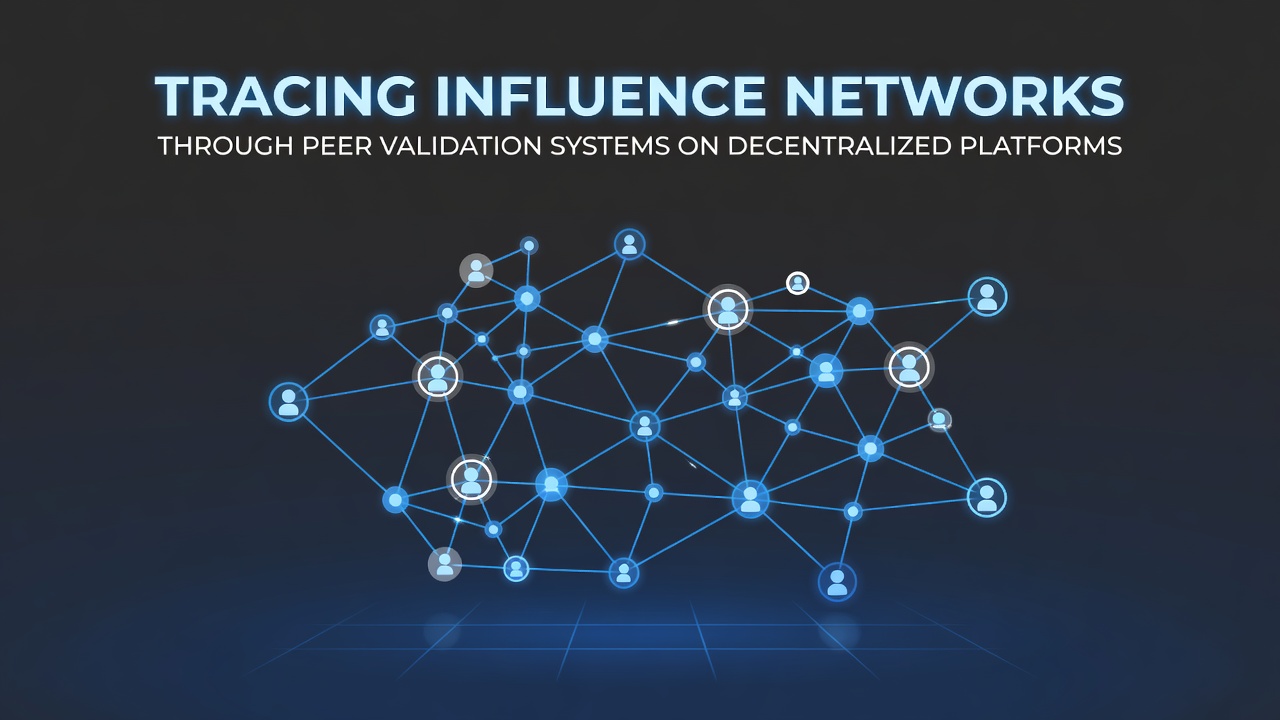
Decentralized platforms rely on peer validation systems to establish credibility without central authorities, and these mechanisms generate traceable influence networks through repeated endorsements and cryptographic verifications that link users across distributed ledgers. Observers note that each validation event creates an edge in a larger graph, allowing analysts to map how authority flows from one participant to another based on consensus signals rather than top-down assignments.
Core Mechanics of Peer Validation
Participants submit content or actions for review by network peers who apply predefined rules encoded in smart contracts, and successful validations accumulate into reputation scores that influence future visibility and weighting in subsequent decisions. Data indicates these scores update in real time as new endorsements arrive, while rejected submissions trigger penalties that reduce a node's standing and limit its reach within the system.
Systems built on protocols such as those used by several blockchain social networks record each validation as a permanent transaction, which creates immutable chains that researchers examine to reconstruct influence pathways over extended periods. Studies from academic institutions show that clusters form around high-validation nodes, and these clusters expand or contract depending on consistent peer approval rates recorded in October 2026 platform logs.
Methods for Mapping Influence Graphs
Analysts extract validation data from public ledgers and apply graph algorithms to identify central actors whose endorsements carry disproportionate weight, and this process reveals both direct connections and indirect pathways where influence travels through intermediary validators. Tools developed for network analysis process thousands of validation events per hour, producing visualizations that highlight bottlenecks where a small number of peers control large portions of the approval flow.
Researchers at multiple universities have published frameworks that combine temporal analysis with degree centrality measures, allowing them to track how influence shifts when validation rules change or when new participants enter the network. Evidence from these frameworks demonstrates that influence tends to concentrate in nodes with long histories of accurate validations, while newer entrants gain traction only after accumulating sufficient peer confirmations over sequential cycles.
Case Examples from Existing Platforms
One platform operating on a layer-two blockchain records every content endorsement as a signed transaction, and community moderators use aggregated validation counts to surface posts that reach broader audiences without algorithmic promotion from a central entity. Another network employs quadratic voting mechanisms where peer validations determine resource allocation, and longitudinal data collected through 2026 reveals that influence networks stabilize after initial growth phases but remain sensitive to coordinated validation campaigns.
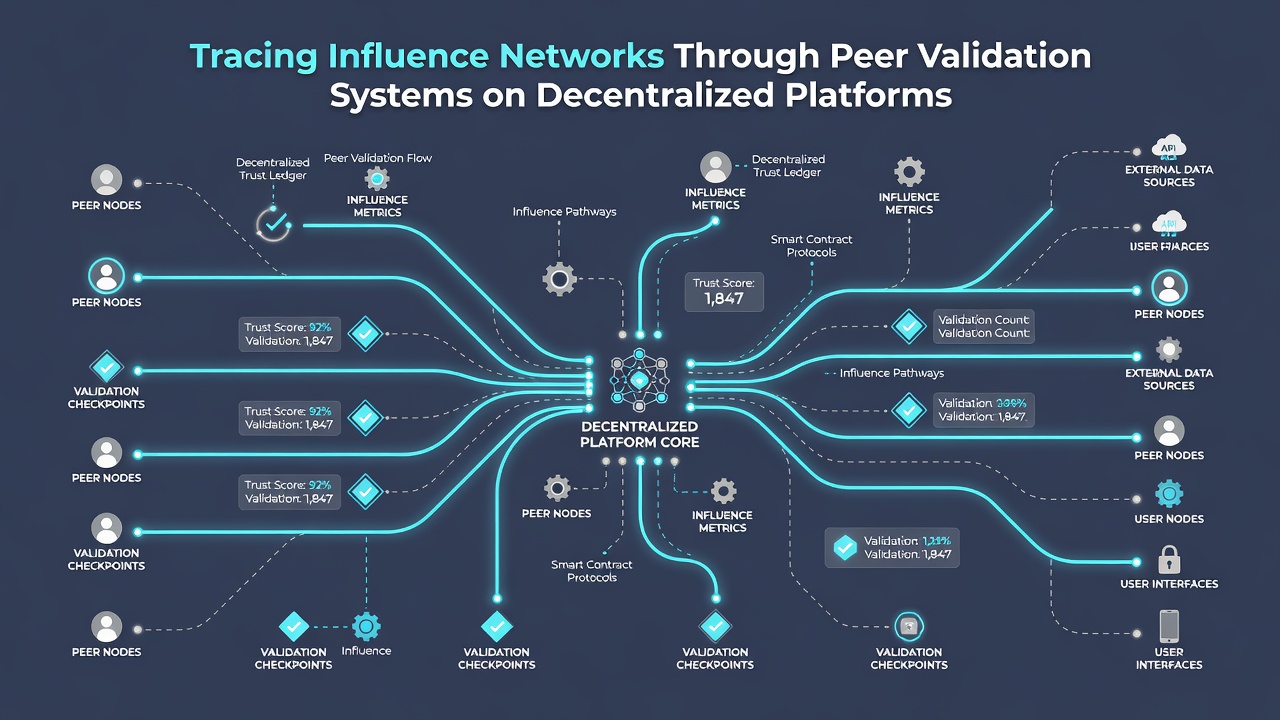
Participants in these environments often discover that their effective reach depends less on follower counts and more on the density of validated interactions they maintain with other active nodes, and this dynamic produces influence maps that differ markedly from traditional social media follower graphs. Reports compiled by research groups at the OECD document similar patterns across multiple decentralized projects, noting that validation density correlates strongly with sustained engagement levels tracked through on-chain metrics.
Data Patterns Observed Through 2026
Platform telemetry released in October 2026 shows a measurable increase in cross-node validation events compared with earlier periods, and the rise coincides with wider adoption of portable reputation standards that allow users to carry validation histories between separate networks. Figures from these reports indicate that networks employing multi-signature validation requirements exhibit slower but more stable influence growth, whereas single-validator models experience higher volatility in centrality rankings.
External audits conducted by independent research organizations confirm that tampering attempts leave detectable anomalies in validation sequences, and these anomalies appear as sudden spikes or isolated clusters that deviate from established interaction patterns. Such anomalies enable platform operators and external observers to flag potential manipulation without requiring access to private user data.
Technical Considerations in Graph Construction
Developers integrate zero-knowledge proofs into validation flows to protect participant identities while still permitting aggregate graph analysis, and this approach preserves privacy while exposing structural properties of the influence network. Engineers continue to refine sampling techniques that reduce computational load when processing large validation datasets, allowing real-time monitoring of influence shifts as they occur.
Interoperability standards under discussion among several protocol teams aim to create shared validation schemas, which would permit influence traces to span multiple platforms and produce more comprehensive network views. Early implementations of these schemas already demonstrate that cross-platform endorsement chains can be reconstructed using existing ledger query tools.
Conclusion
Peer validation systems on decentralized platforms generate persistent records that support systematic tracing of influence networks through graph-based methods and temporal analysis. Data accumulated through 2026 confirms that these networks exhibit measurable structural properties, including concentration around consistently validated nodes and sensitivity to rule modifications. Continued development of interoperable standards and privacy-preserving techniques expands the scope of analysis while maintaining the distributed nature of the underlying platforms.