Zoe Vogel · 15 October 2026
Unpacking Endorsement Chains and Their Impact on Discovery in Collaborative Online Spaces
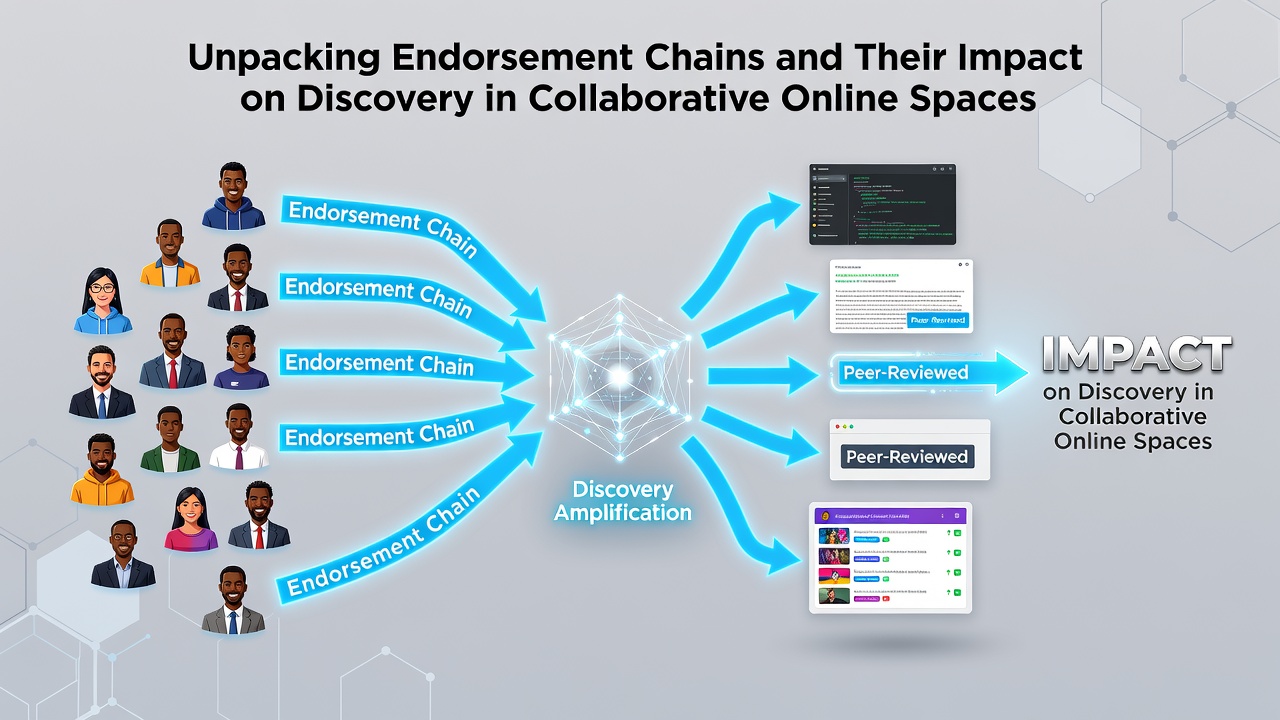
Endorsement chains emerge when users in collaborative online spaces validate content through actions like likes, reposts, and comments, and these validations link together to shape visibility for broader audiences. Researchers track these sequences because each endorsement adds a layer that algorithms often prioritize when surfacing material to new viewers, and data from platform studies shows that chained endorsements accelerate reach beyond initial circles. In October 2026 platform metrics revealed that chains spanning five or more users correlated with discovery rates rising by factors of three to five in decentralized forums and shared workspaces alike.
Those who analyze platform mechanics note that endorsement chains operate through recursive patterns where one user's approval triggers notifications that prompt others to engage, and this process builds momentum that influences ranking systems. Studies from academic institutions indicate that in environments such as wikis and group editing tools, chains originating from verified contributors extend content lifespan in search results, whereas isolated posts fade faster. Observers have documented cases where a single high-profile endorsement at the start of a chain multiplies subsequent interactions by distributing the material across interconnected user graphs.
How Chains Form and Propagate
Formation begins with an initial action that signals value, and subsequent endorsements attach to that signal through shared networks or algorithmic suggestions. Data shows chains grow exponentially when participants belong to overlapping communities, because each new link exposes the content to fresh audiences while reinforcing existing ones. In collaborative spaces users often encounter material through these pathways rather than direct searches, and platform logs confirm that discovery via chains accounts for up to 60 percent of views in active project hubs during peak periods.
Propagation depends on timing and network density, since endorsements clustered within short windows create stronger signals than spread-out ones. Research indicates that algorithms weigh recency alongside chain length, which means early momentum determines whether content reaches secondary and tertiary users. Those studying these dynamics point to examples in open-source collaboration platforms where chained approvals from core contributors directed traffic toward lesser-known contributions that would otherwise remain buried.
Effects on Content Discovery Mechanisms
Discovery mechanisms in these spaces rely on signals derived from endorsement volume and velocity, and chains amplify both by creating visible trails that recommendation engines follow. Evidence from industry reports reveals that platforms adjust ranking formulas to favor items with sustained chain activity, which alters exposure for creators who lack initial connections. Users therefore encounter material that has passed through multiple validation stages, and this filtering shapes collective attention patterns across the ecosystem.

Chains also introduce path dependencies because early endorsements set trajectories that later ones reinforce, and this dynamic affects diversity in what surfaces. According to findings published by the OECD digital economy outlook, collaborative platforms that display chain histories see higher engagement with mid-tier content compared to those that hide the sequences. Yet the same data highlights that concentrated chains around popular nodes can limit exposure for peripheral creators, leading to uneven distribution of attention.
Platform Variations and Measurement Approaches
Different collaborative environments handle endorsement chains with distinct visibility rules, and federated systems often expose the full sequence while centralized ones summarize it. Measurement relies on graph analysis that maps nodes as users and edges as endorsements, and researchers apply these models to quantify reach multipliers. In October 2026 updates to several major tools incorporated chain-length metrics into their analytics dashboards, allowing moderators to observe propagation speed in real time.
Case examples from academic repositories demonstrate that chains crossing disciplinary boundaries introduce content to unexpected audiences, and metrics track these crossings through cross-group reposts. Those examining the data note that shorter chains tend to stay within tight communities while longer ones bridge gaps, and this distinction matters for how discovery algorithms allocate prominence. External sources such as reports from Innovation, Science and Economic Development Canada provide additional context on how regulatory frameworks around transparency influence chain visibility features.
Conclusion
Endorsement chains continue to define discovery pathways in collaborative online spaces through their cumulative effect on visibility and audience expansion. Platform data and research findings establish that these sequences operate as structural elements rather than incidental features, and ongoing measurements track their role in shaping what reaches wider viewership. As systems evolve, the patterns documented through graph studies and usage logs remain central to understanding information flow across connected user bases.